
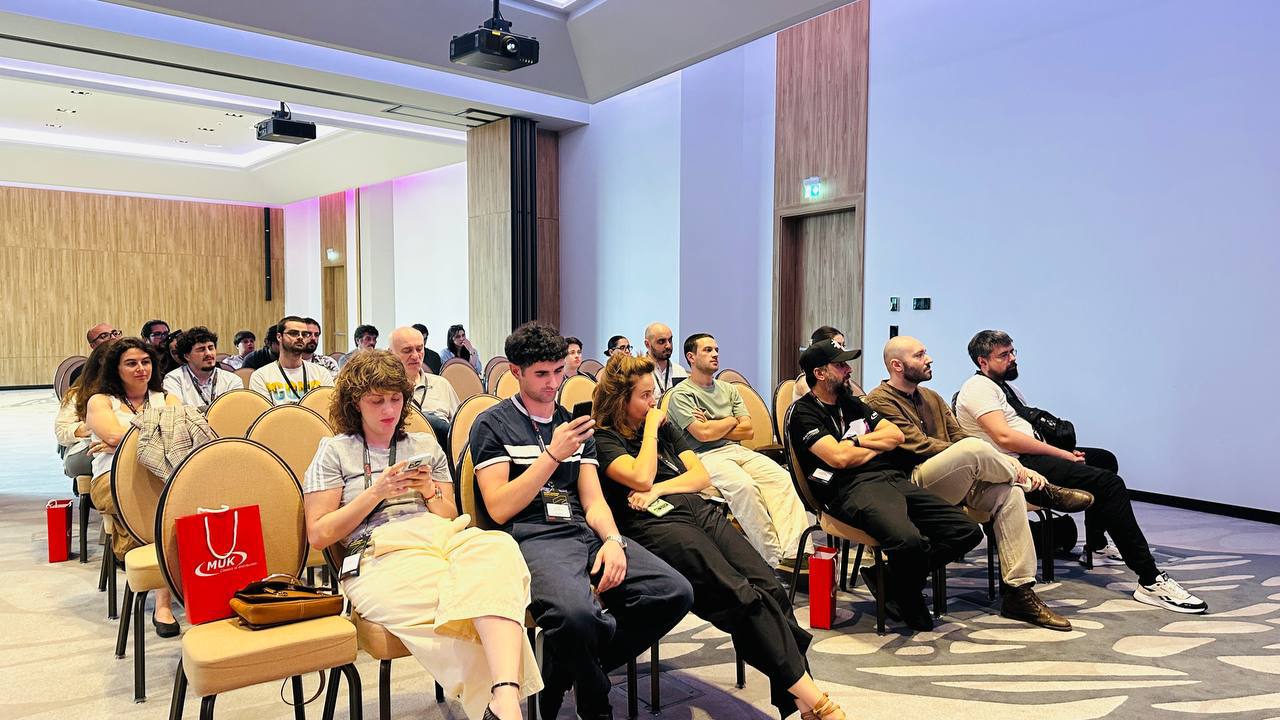
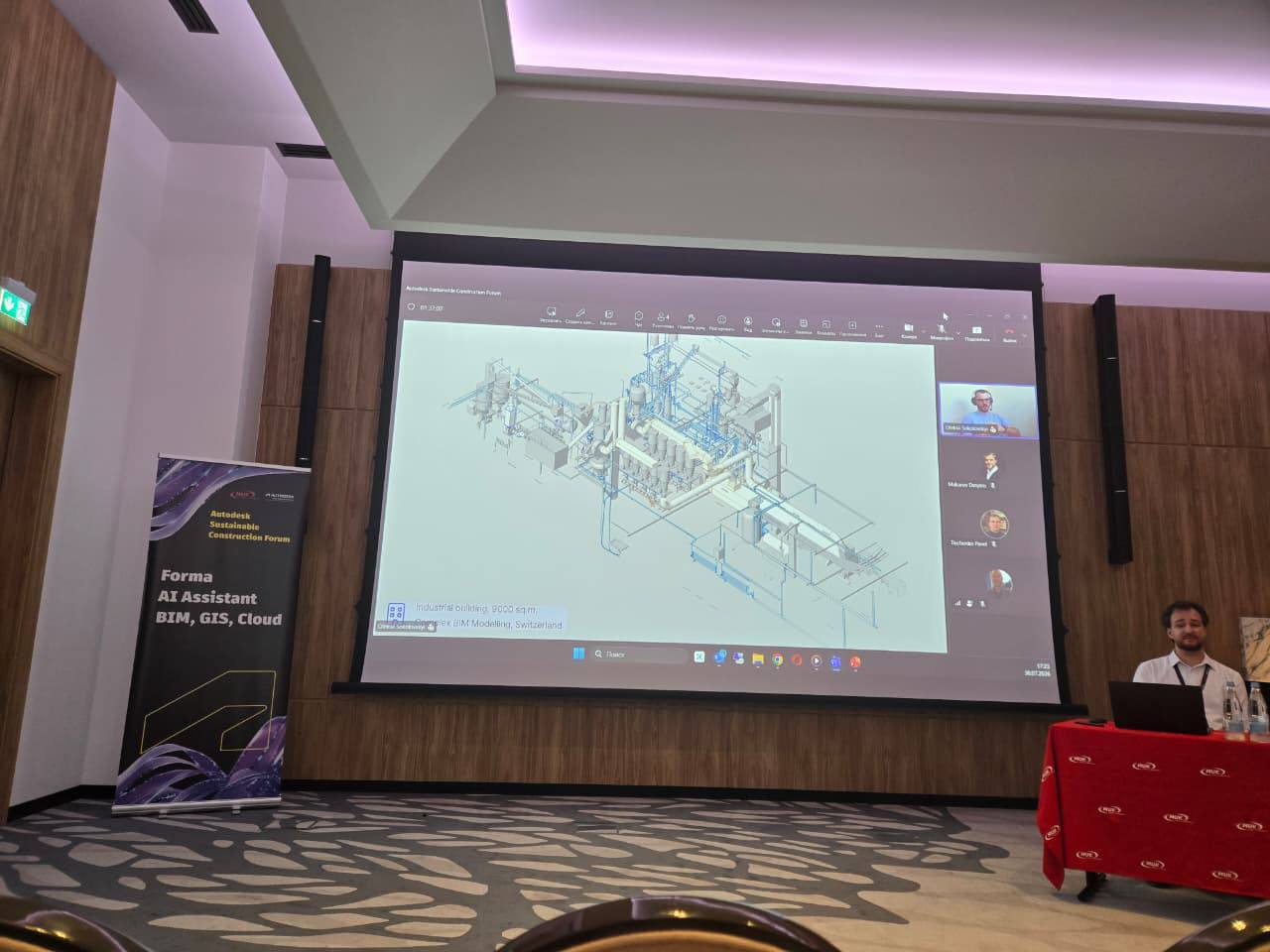
Earlier this week, Tbilisi, Georgia hosted the international Autodesk Sustainable Construction Forum, a flagship event that brought together AEC leaders, developers, and technology experts from across the region. The program covered the most pressing industry topics—ranging from AI and Autodesk Forma to connecting budgets and timelines via Autodesk Platform Services (APS). Held in a hybrid format, the forum allowed several keynote speakers, including myself presenting remotely, to join live, engage with the audience, and share real-world engineering strategies from our international projects.
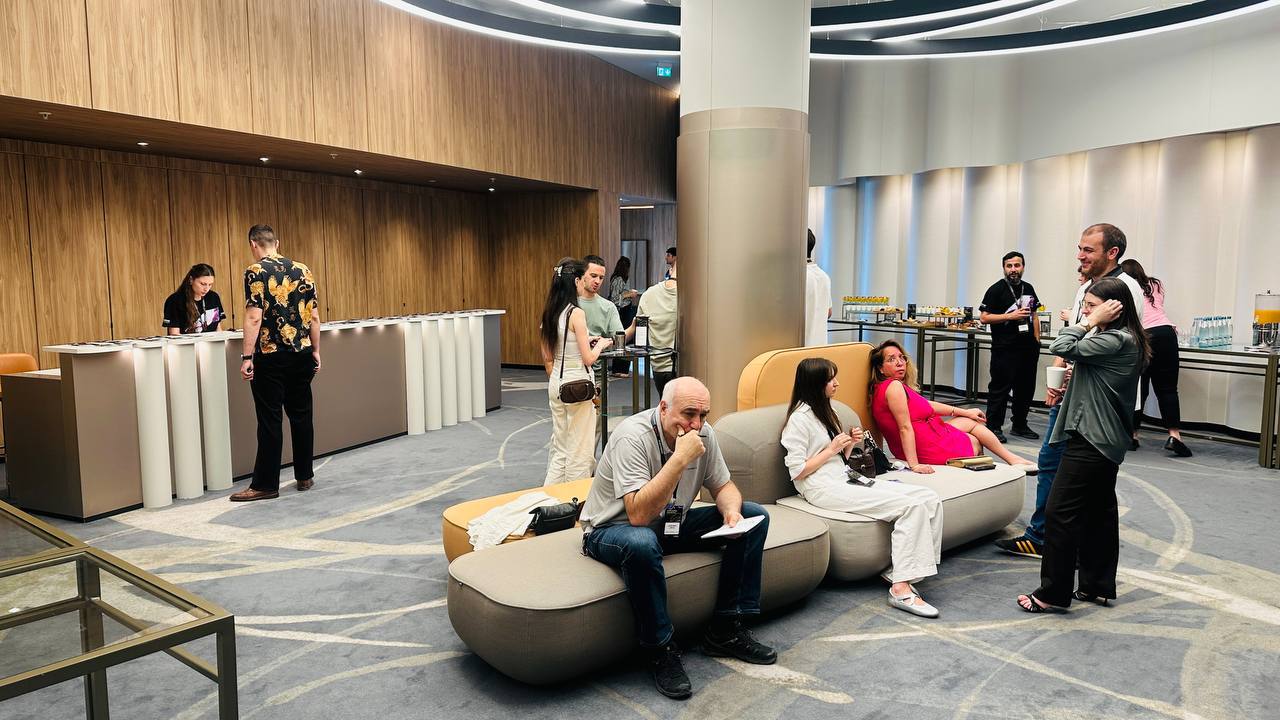
Yesterday’s presentation at the Autodesk Sustainable Construction Forum in Tbilisi, Georgia, marked an important milestone in showcasing the international experience and practical approaches of The Heyon platform. The event brought together leading developers, engineers and construction executives, creating a great platform for an open discussion on the real challenges faced by modern B2B projects.
As part of our talk, we demonstrated through specific projects that international BIM implementation is always about more than just creating a 3D model. In the case of a large residential complex in Ukraine, we encountered 160 billion potential collisions and 20 million data cells, which clearly proved our key conclusion: labor costs on BIM projects do not scale linearly with building area, and high precision requires proportionally higher resources at the design stage. On a centuries-old historic site – the Estonia Town Hall – the main challenge was its unique and highly irregular geometry, where every object required individual recreation from point clouds. For a transit hub in Italy, the primary objective was matching as-built conditions with the design model, where Scan-to-BIM helped identify unbuilt elements that were already present on site, creating a reliable foundation for facility management teams. Meanwhile, in a Swiss industrial project, the main test was super tight deadlines, which required expanding our team fivefold and rapidly modeling dense internal MEP networks to support subsequent demolition decisions.
The main takeaway from our participation in the forum is the confirmation that the market needs more than just fulfilling a scope of work – it requires a deep, partner-level analysis of bottlenecks before construction even begins. We sincerely thank the organizers and all participants for an action-packed day, constructive networking and a readiness to adopt progressive digital workflows in their future projects.